
 AI
AI
 AI
AI
 AI
AI
Ingredients
Method
-
Preheat the oven to 150°C fan. Place a deep roasting tin in the oven and bring a full kettle to the boil. You want the water bath already warm when the custard goes in.
-
Grease a 900ml ovenproof ceramic dish generously with butter, reaching into the corners and up the sides. Set aside on your work surface.
-
Crack the eggs into a large jug and beat them briefly with a fork until the yolks and whites are just combined. Do not whisk aggressively; you are not making scrambled eggs. Foam on the surface will mar the finished skin.
-
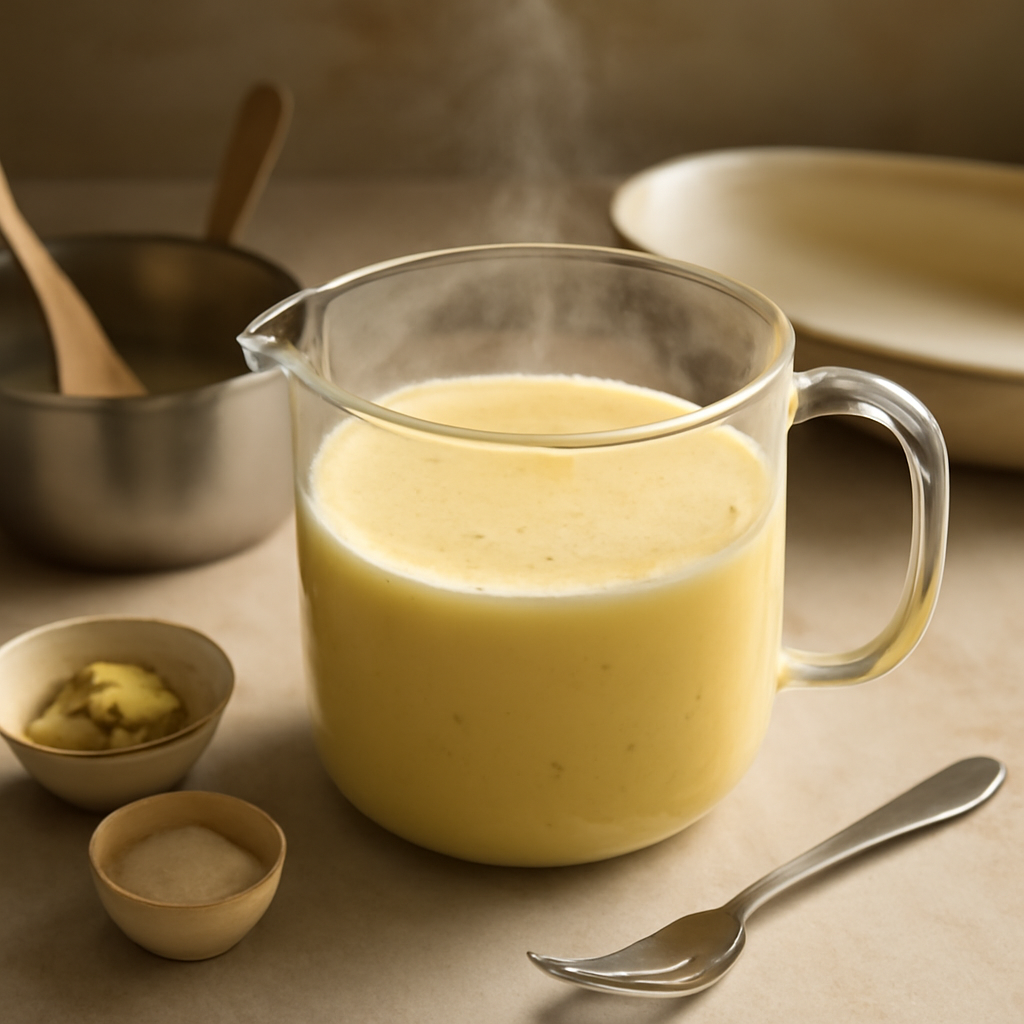
Warm the milk and cream together in a small saucepan over a low heat until they reach approximately 60°C. You want them steaming but nowhere near a simmer. Pour them slowly into the beaten eggs while stirring steadily with a wooden spoon. Add the mustard, salt, white pepper and nutmeg and stir to incorporate.
-
Add the grated Cheddar and stir until it begins to melt into the warm mixture. Some small threads may remain; that is acceptable and will resolve during baking.
-
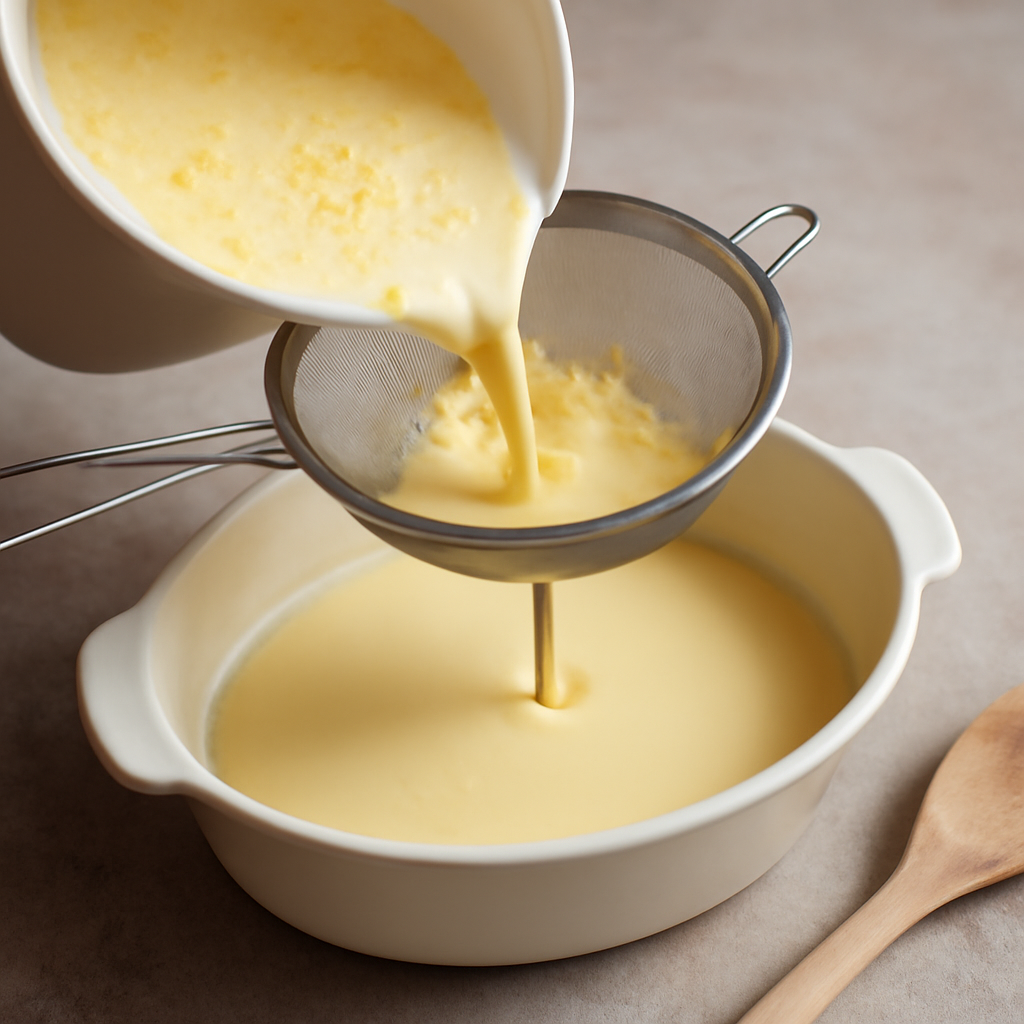
Pour the custard mixture through a fine sieve directly into the prepared dish. This catches any stringy egg and any undissolved cheese, and it is not a step to skip if you want a smooth, glassy set.
-
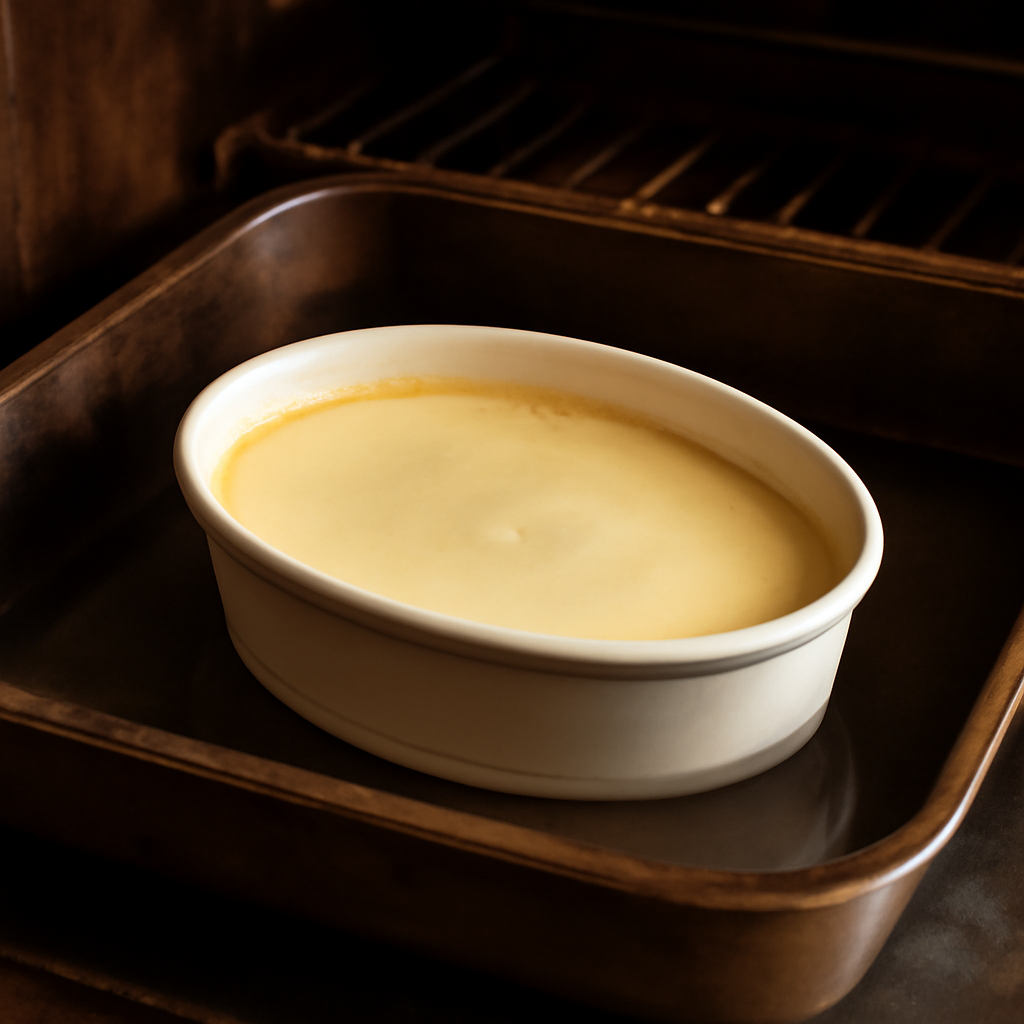
Carry the dish carefully to the oven and lower it into the roasting tin. Pour the boiling water from the kettle into the roasting tin until it reaches halfway up the sides of the custard dish. Close the oven door gently.
-
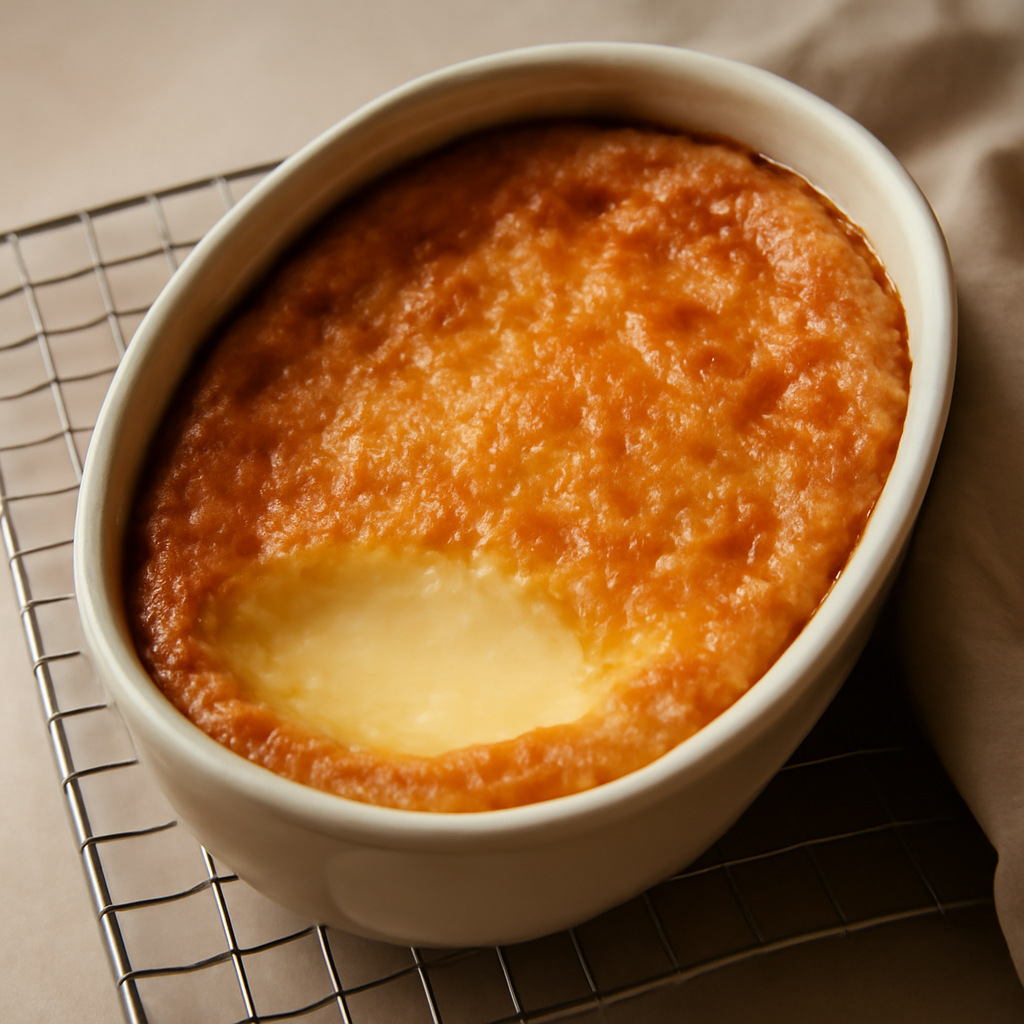
Bake for 40 to 45 minutes. The custard is ready when the edges are fully set and the centre has a slight wobble, roughly a 3cm trembling circle when you give the tin a short, careful nudge. The surface should be a pale amber-gold with no visible liquid pooling.
-
Remove the custard dish from the water bath using a tea towel and set on a wire rack for 10 minutes before serving. It will continue to firm slightly as it rests. Do not skip this rest or the centre will be too loose to serve cleanly.
Irish Context
Cheddar is the most widely produced and consumed cheese in Ireland, made across several creameries and aged to varying degrees of sharpness. The mature styles, aged for a year or more, have a slightly crystalline texture and a pronounced tang that holds up well against the egg and cream in this custard rather than disappearing into blandness.
Dairy farming shapes the everyday kitchen here in practical ways: whole milk and double cream are standard household items rather than specialty purchases, which makes a dish like this a genuinely low-effort thing to put together on a weekday. The water bath technique is less common in everyday Irish home cooking than in professional kitchens, but the result it produces is markedly better than direct oven heat and worth the minor inconvenience of carrying a dish of boiling water.
Tips
Mature Cheddar from an Irish creamery gives the sharpest flavour without becoming greasy in the custard. Avoid pre-grated cheese; the anti-caking agents in it prevent smooth melting.
If the surface browns too quickly before the custard has set, lay a sheet of foil loosely over the top for the final 10 minutes. White pepper is used here rather than black because the flecks of black pepper in a pale custard look like dust rather than seasoning.
The heat is the same. This dish does not reheat well.
Serve it freshly baked. Leftovers cold from the fridge are edible but the texture becomes dense and the fat separates slightly.
To test without a thermometer, a thin-bladed knife inserted 2cm from the edge should come out clean while the centre still jiggles. Pull it then; every extra minute risks a rubbery set.
A gratin dish works in place of the deep ceramic dish but gives a shallower, faster-setting custard. Reduce baking time to approximately 30 to 35 minutes and watch it closely from 25 minutes.

Author Commentary