
 AI
AI
 AI
AI
 AI
AI
Ingredients
Method
-
Preheat the oven to 180°C (fan 160°C). You want a steady, moderate heat here. Too high and the cider scorches before the onions have time to soften through.
-
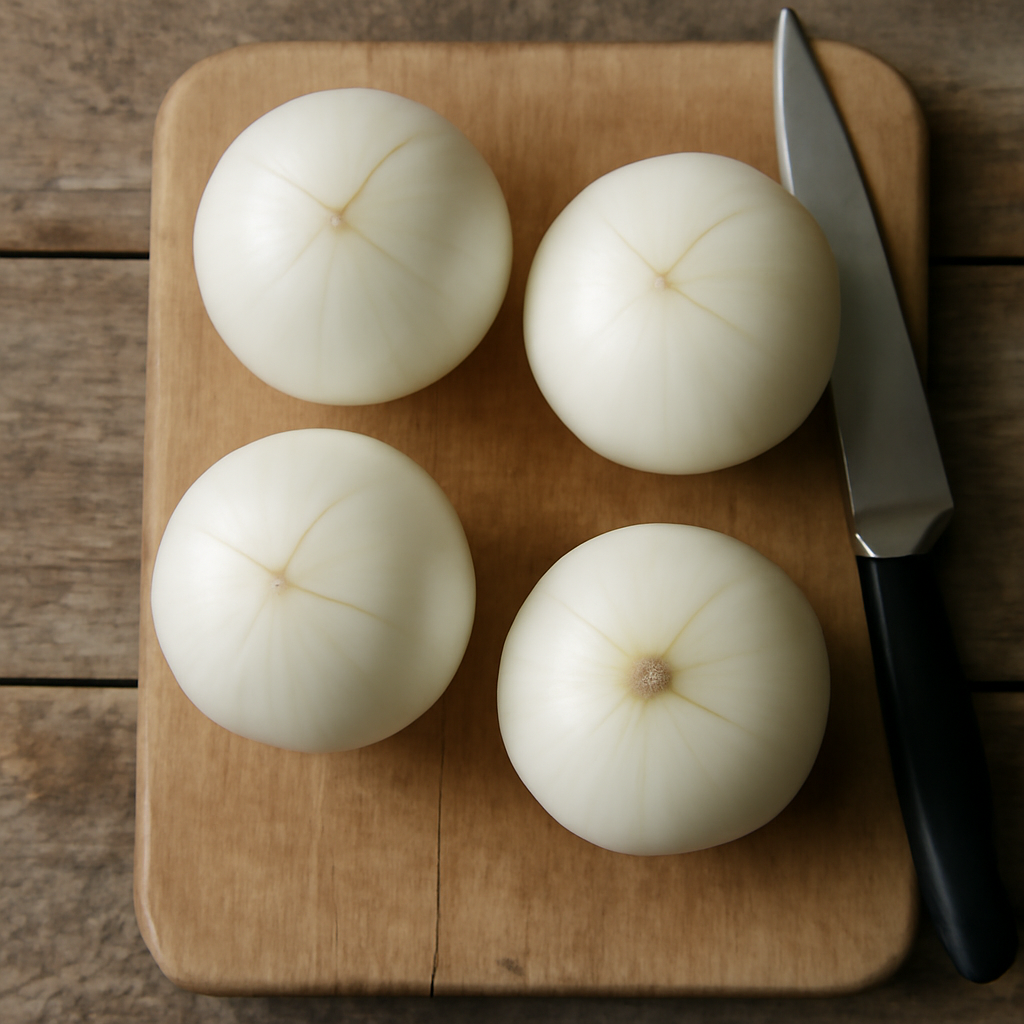
Peel the onions carefully, keeping the root ends intact. The root holds each onion together as it bakes, and if it detaches early the layers will separate and cook unevenly. Score a shallow cross into the top of each onion, cutting down about 2cm. This lets the heat and liquid penetrate the centre.
-
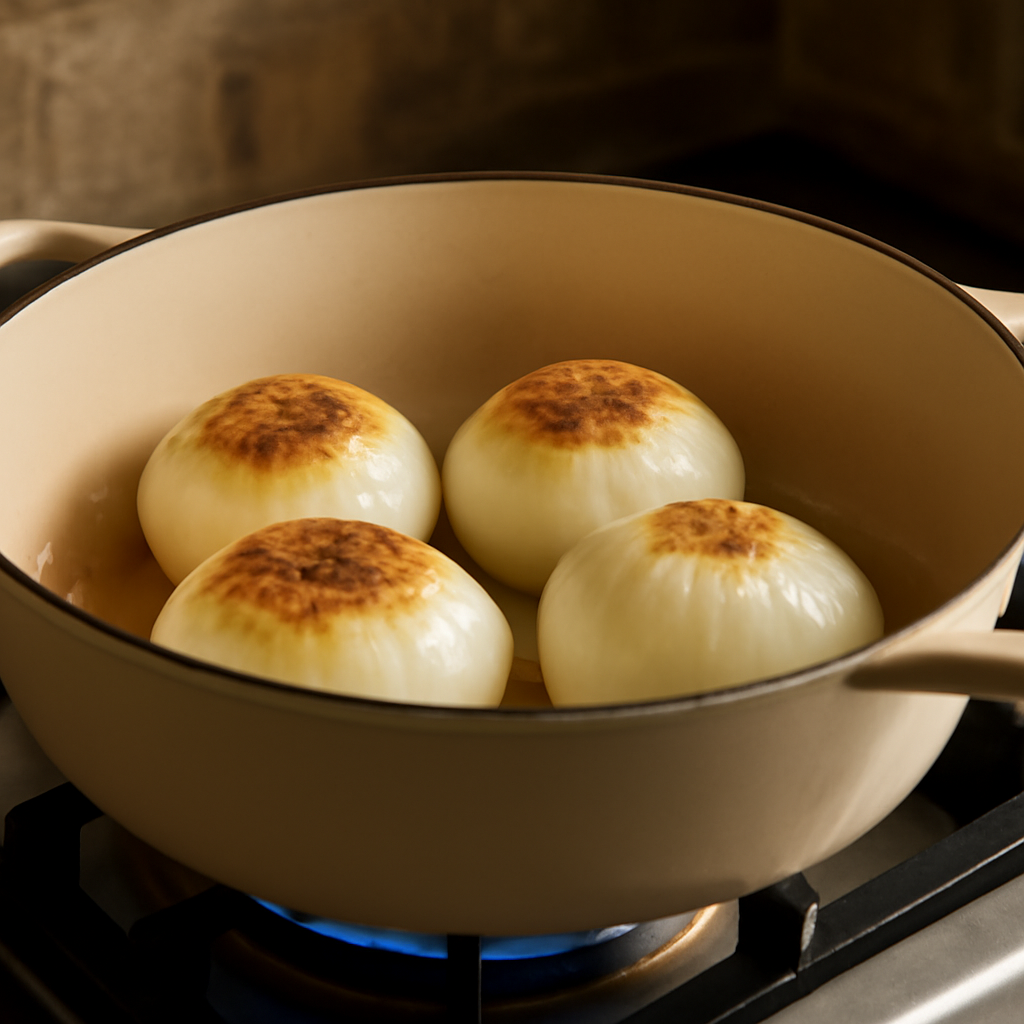
Heat the olive oil in a wide, ovenproof casserole or deep roasting dish over a medium heat on the hob. Lay the onions in cut-side down and leave them without touching for 4 to 5 minutes, until the scored tops are golden-brown and the cut edges have a little colour. Resist the urge to move them. That colour is what gives the finished dish its depth.
-
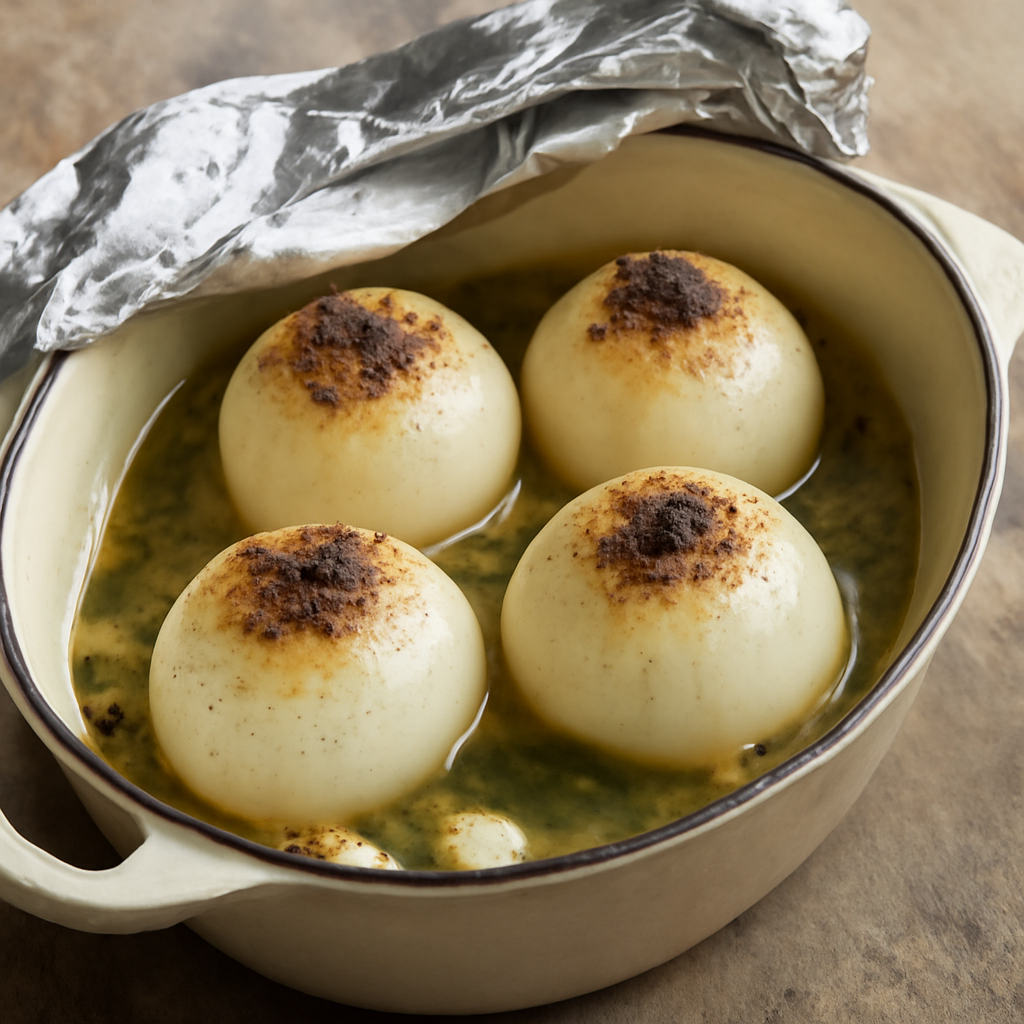
Turn the onions upright. Pour in the cider, vegetable stock, and cider vinegar. The liquid should come roughly halfway up the sides of the onions. Add the bay leaves and scatter the thyme leaves over and around the onions.
-
Sprinkle the dark brown sugar evenly over the top of each onion, then season with the sea salt and black pepper. Dot the butter cubes around the base of the dish, between the onions.
-
Cover the dish tightly with a lid or with foil sealed at the edges. Bake at 180°C for 45 minutes. At this point the onions should be completely soft when pierced with a skewer, with no resistance at the centre. If there is any firmness, cover and return for a further 10 minutes.
-
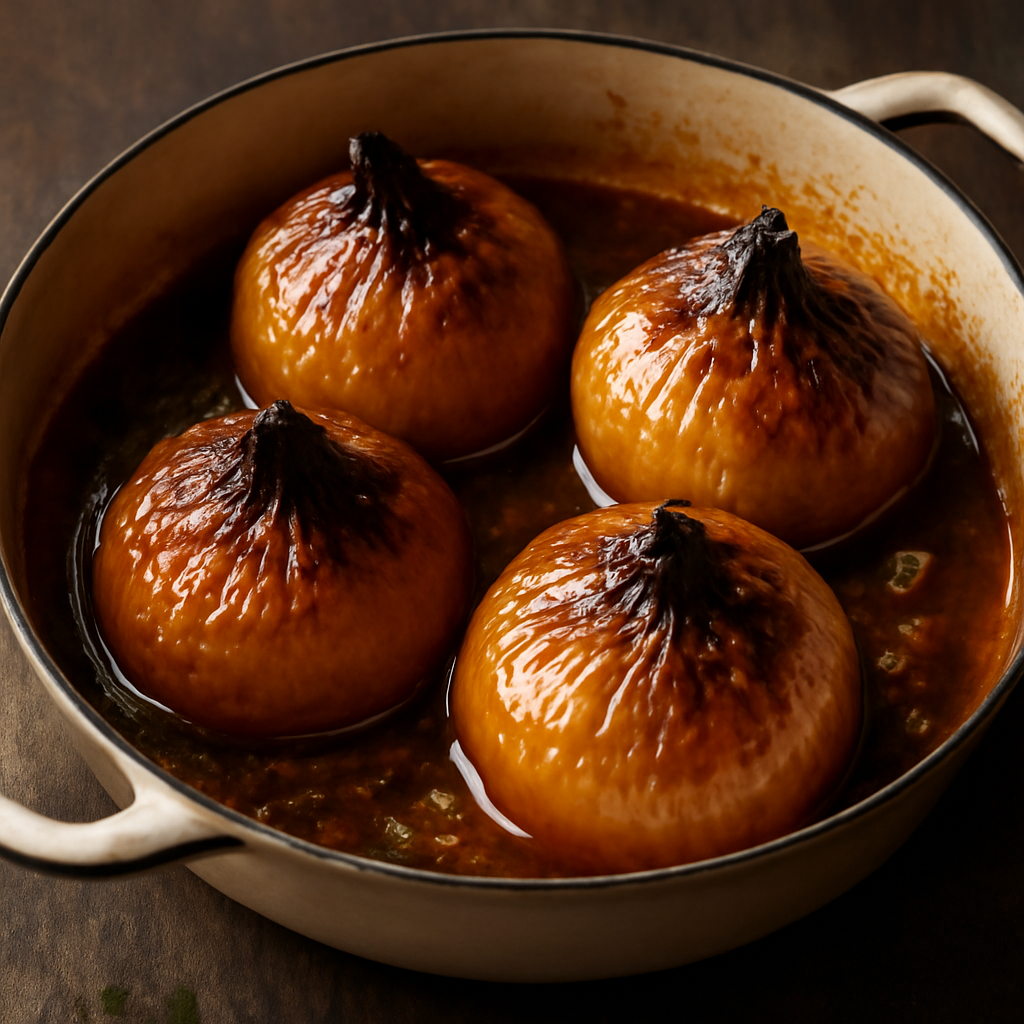
Remove the cover, increase the oven temperature to 200°C (fan 180°C), and bake uncovered for a further 20 to 25 minutes. The liquid will reduce and thicken noticeably, and the tops of the onions will take on a deep amber colour. Baste the onions twice during this final stage using a spoon, pulling the reduced cooking liquor up over the tops.
-
The dish is ready when the liquid in the base has reduced to a syrupy, lightly glossy glaze and the outer layers of each onion have caught and darkened slightly at the tips. The smell shifts from sharp and alcoholic early in cooking to something sweeter and more mellow by the end.
-
Remove the bay leaves. Rest for 5 minutes before serving. The onions hold heat well and the glaze continues to thicken slightly as it sits.
Irish Context
Dry cider production has a long foothold in Munster and parts of the south-east, where apple orchards have been maintained for generations. Several small Irish producers now make cider that is genuinely dry rather than sweetened, and these work far better here than anything fizzy or commercial-sweet.
The sharpness matters. Onions themselves have been a staple of Irish kitchen gardens and farm cooking for as long as records exist, appearing across every economic stratum precisely because they are cheap, store well, and respond to almost any cooking method.
This dish requires very little in the way of additional ingredients, which suits it well to the Irish tradition of making something worth eating from whatever is on hand.
Tips
White onions hold their structure better than yellow onions during a long bake. Yellow onions will still work but tend to slump and lose their shape by the end.
Red onions turn an unappetising grey-purple in this dish and are best avoided. The cider vinegar is not optional.
Without it the dish reads as too sweet. It sharpens the glaze and lifts the acidity back after the sugar and cider have had their way.
If your casserole dish is too large and the cider spreads thin across the base, it will evaporate in the first 20 minutes before the onions have softened. Use a dish where the onions sit fairly close together.
Leftovers keep well in the fridge for two days. Reheat gently in a low oven covered with foil with a splash of water added to the dish, or slice cold and layer onto sandwiches with mature cheddar.
If the glaze looks very dark and sticky before the onions are fully soft, add a small splash of stock or water, cover again, and continue at the lower temperature.

Author Commentary