

 AI
AI
 AI
AI
 AI
AI
Ingredients
Method
-
Drain the soaked cannellini beans and rinse them under cold running water. Set aside. Soaking overnight reduces the cooking time significantly and helps the beans cook evenly, but do not add salt to the soaking water as it toughens the skins.
-
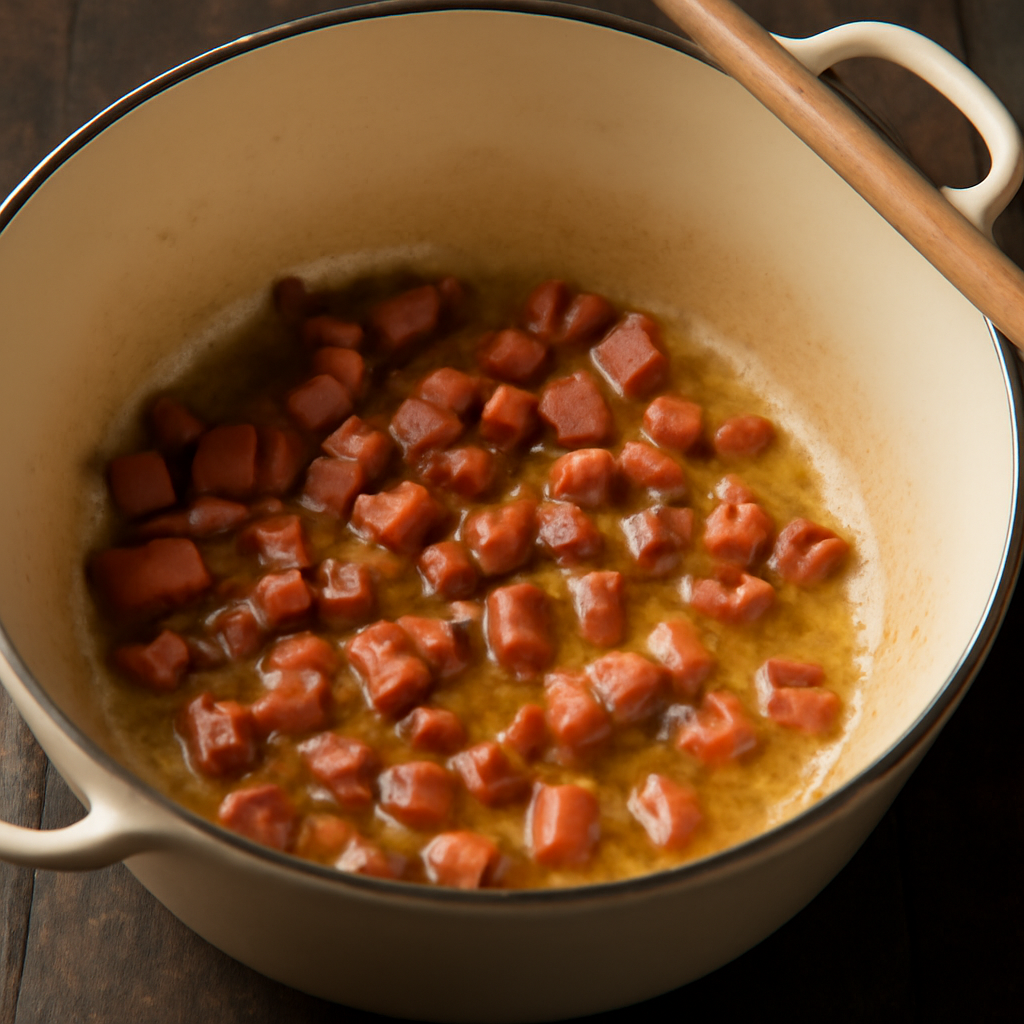
Place a large, heavy-based pot or Dutch oven over a medium heat. Add the rapeseed oil and, once it shimmers, add the bacon pieces. Fry for 6 to 8 minutes, stirring occasionally, until the bacon has rendered its fat and the edges are beginning to crisp and turn deep gold. Do not rush this step. The fond that builds on the base of the pot is where much of the eventual flavour of the broth will come from.
-
Add the diced onion to the pot with the bacon. Reduce the heat slightly to medium-low and cook for 8 to 10 minutes, stirring every couple of minutes, until the onion is soft and just translucent. It should not colour beyond pale gold.
-
Add the sliced garlic and cook for 1 minute until fragrant but not browned.
-
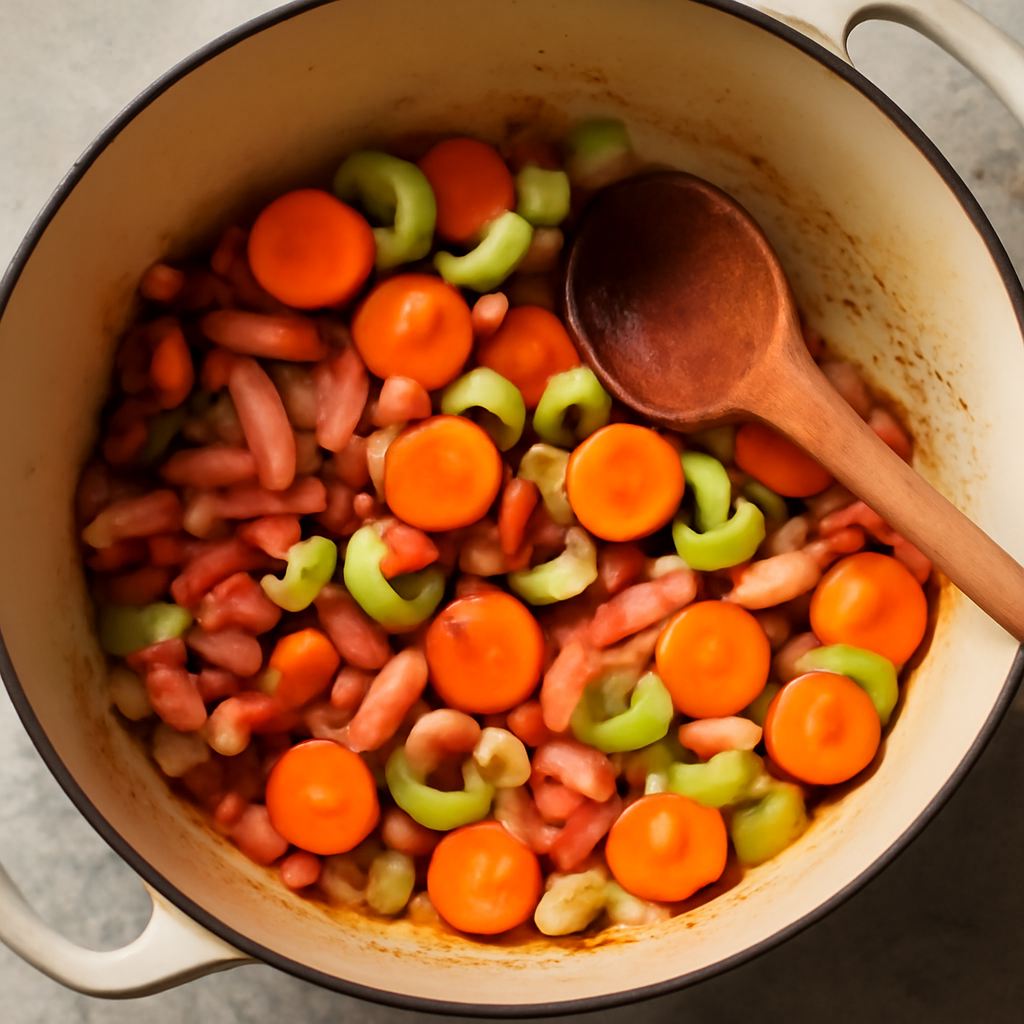
Add the carrots and celery to the pot. Stir everything together and cook for a further 3 to 4 minutes so the vegetables begin to soften at the edges.
-
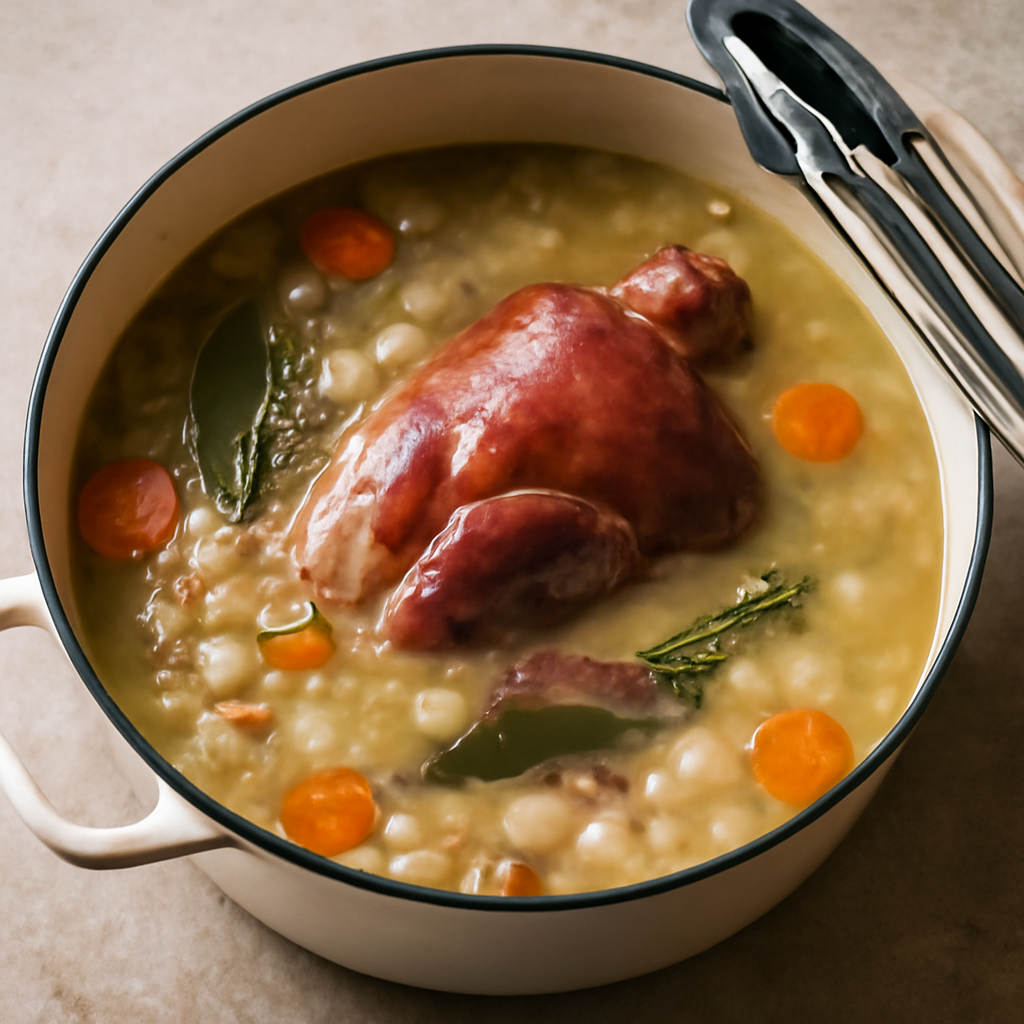
Nestle the ham hock or ham pieces into the pot. Add the drained cannellini beans, bay leaves, and thyme sprig. Pour in the cold water and stock. The liquid should cover everything by at least 3cm; add a little more water if needed.
-
Bring the soup to a rolling boil over a high heat, then immediately reduce to a gentle simmer. Skim off any grey foam that rises to the surface during the first 10 minutes of simmering. This foam is protein released from the beans and meat, and removing it keeps the broth clear and clean-tasting.
-
Simmer uncovered at a steady, low bubble for 90 minutes. The beans should be completely tender with no chalky centre when pressed between your fingers. If they are still firm at 90 minutes, continue cooking and check every 15 minutes. The broth will reduce slightly and take on a pale, starchy opacity from the beans.
-
Remove the ham hock or ham pieces from the pot with tongs or a slotted spoon. Once cool enough to handle, pull the meat away from the bone, discard the skin, fat, and bone, then shred the ham into rough chunks and return it to the pot.
-
Remove and discard the bay leaves and thyme sprig. Taste the broth and season with black pepper. Add salt carefully at this stage; the bacon and ham will already have contributed a good deal of salt to the pot, so taste before adding anything.
-
If you prefer a slightly thicker consistency, use the back of a wooden spoon or a potato masher to crush roughly a quarter of the beans against the side of the pot. Stir through and the broth will thicken within a couple of minutes over a low heat.
-
Ladle into wide, deep bowls, scatter over the chopped flat-leaf parsley, and serve immediately with good soda bread or a thick slice of brown bread.
Irish Context
Ham and bean soups have been made in Irish farmhouse kitchens for as long as people have been curing pork and keeping dried pulses through winter. There is nothing elaborate here.
This version uses smoked streaky bacon alongside a ham hock, which was and still is a common and economical cut available from any good Irish butcher. Cured and smoked pork products from small Irish producers tend to have a cleaner, less chemical smoke than many supermarket versions, and the difference shows clearly in a soup where the pork flavour is the whole point.
The cannellini beans are not traditional in the strictest sense, but dried white beans of various kinds have been a practical Irish store-cupboard item for a long time. This recipe does not claim otherwise.
It is simply a good, honest pot of soup that suits the Irish climate and the Irish habit of making something substantial from inexpensive cuts.
Tips
If you forget to soak the beans overnight, cover them with cold water in a saucepan, bring to a boil, cook for 2 minutes, then remove from the heat and leave to soak for 1 hour. Drain and proceed as normal; you may need to add 20 to 30 minutes to the final cooking time.
A ham hock gives the best result here because the bone and collagen produce a broth that coats the spoon slightly. If you are using boneless ham pieces instead, the soup is still good but thinner; compensate by mashing slightly more beans at the end.
The soup thickens considerably as it cools and even more so overnight in the fridge. Reheat gently over a low heat with a splash of water or stock to loosen it back to the right consistency.
This keeps well in the fridge for up to 4 days. The flavour deepens on the second day as the beans continue to absorb the broth.
Watch the simmer. If the heat is too high, the beans can burst and turn mushy before the ham is tender.
A lazy, gentle bubble is what you are after, just a few slow pops at the surface. Cannellini beans can be replaced with haricot beans or butter beans.
Butter beans give a creamier texture and break down more readily, which produces a thicker soup without any mashing.

Author Commentary