
 AI
AI
 AI
AI
 AI
AI
Ingredients
Method
-
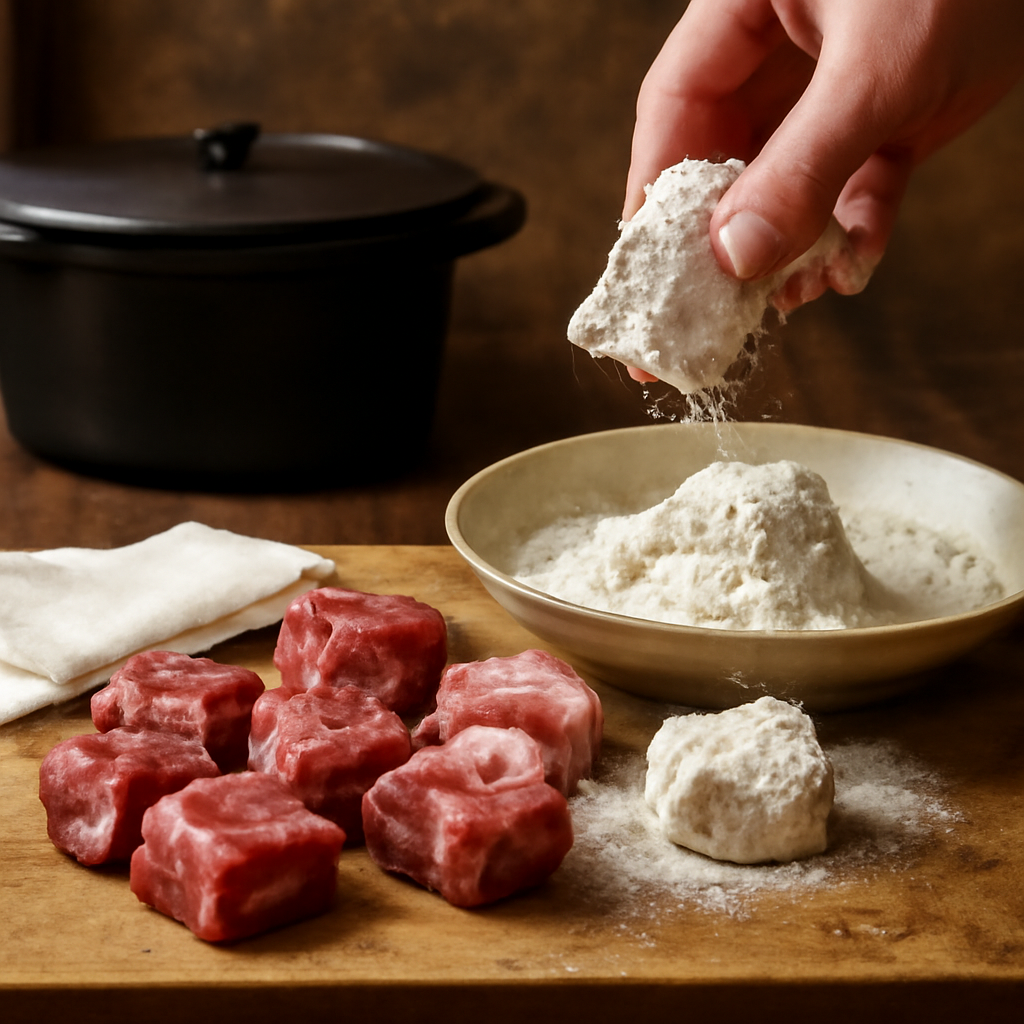
Take the donkey shoulder chunks out of the fridge at least 30 minutes before cooking. Pat them completely dry with kitchen paper. Any surface moisture will steam the meat in the pan rather than sear it, and you will lose the crust that carries a lot of the flavour in the finished stew.
-
Toss the dried meat in the seasoned flour until each piece is lightly coated. Shake off the excess. The flour is not just for thickening; it creates a surface that browns properly and helps the sauce bind later.
-
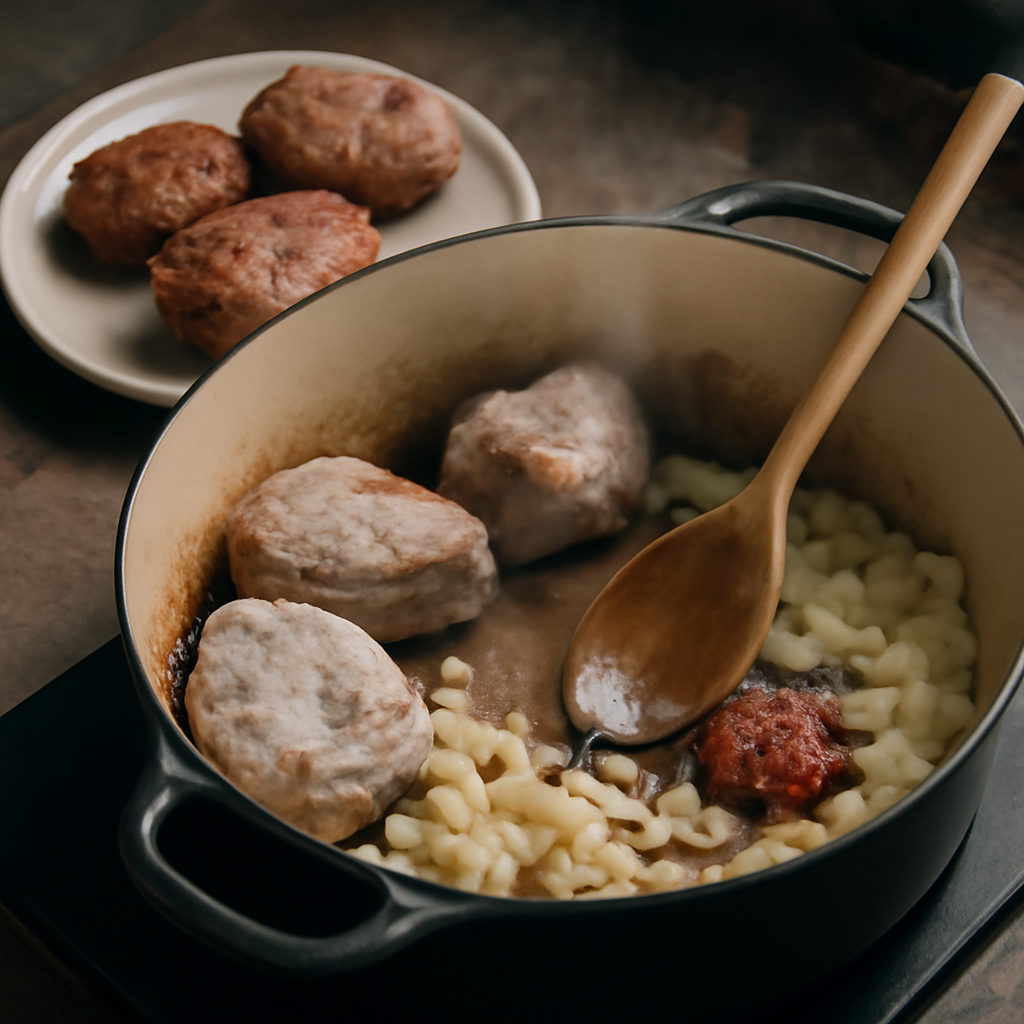
Heat a large, heavy-based casserole or Dutch oven over a high heat. Add 2 tablespoons of the rapeseed oil and wait until it shimmers. Brown the meat in batches, no more than 4 or 5 pieces at a time, so the pan stays hot. Give each piece 2 to 3 minutes per side without moving it. You are looking for a deep mahogany crust, not a grey steam. Set the browned pieces aside on a plate.
-
Reduce the heat to medium. Add the remaining tablespoon of oil to the same casserole and add the onions. Cook for 6 to 8 minutes, stirring occasionally, until they have softened and are beginning to colour at the edges. Add the garlic and cook for a further 2 minutes.
-
Add the tomato puree and stir it into the onion mixture. Let it cook out for 2 minutes so it loses its raw, acidic edge and takes on a slightly darker colour.
-
Pour in the stout. It will hiss and lift the caramelised residue from the base of the casserole. Use a wooden spoon to scrape every bit of that up; it all goes into the sauce. Let the stout reduce by roughly half, which takes about 4 minutes at medium heat.
-
Return the browned meat to the casserole. Add the beef stock, Worcestershire sauce, bay leaves, thyme sprigs, and rosemary. The liquid should come up to just below the top of the meat. If it does not, add a splash more stock or water.
-
Bring to a slow simmer, then put the lid on and transfer to an oven preheated to 160 degrees Celsius. Cook for 1 hour and 30 minutes.
-
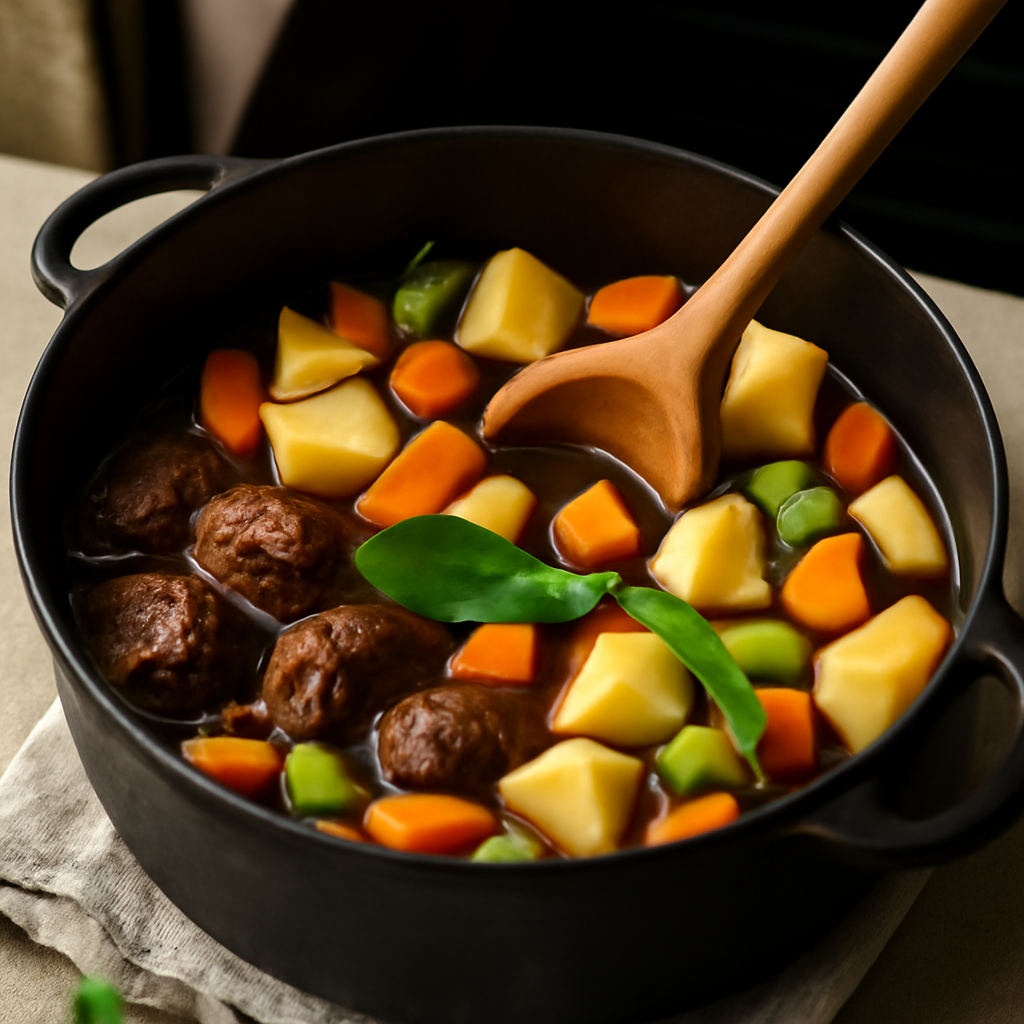
After 1 hour and 30 minutes, open the casserole and add the carrots, parsnips, celery, and potatoes. Stir gently to submerge them in the liquid. Put the lid back on and return to the oven for a further 1 hour.
-
After that final hour, check the meat by pressing a piece with a spoon. It should give without resistance and start to separate along the grain. The potatoes should be cooked through but not collapsed. If the sauce looks thin, remove the lid and return to the oven for 15 minutes to reduce it. It should coat the back of a spoon and leave a clear line when you run a finger through it.
-
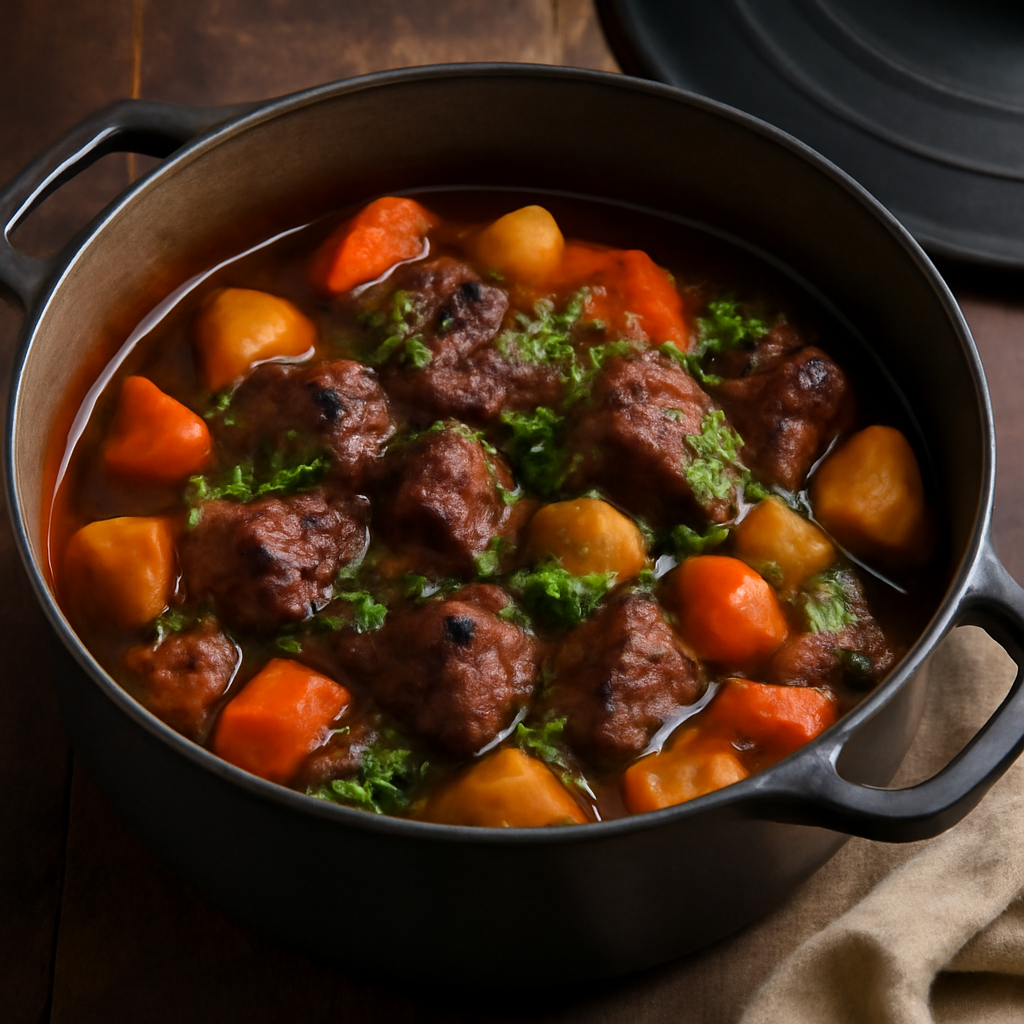
Discard the bay leaves, thyme stalks, and rosemary sprig. Taste and correct the seasoning. Scatter the chopped parsley over the top and bring the casserole directly to the table.
Irish Context
Donkeys were working animals across rural Ireland for centuries, used for turf-cutting, transport, and farm work. When a working animal could no longer work, practical households did not waste the meat.
Donkey stew existed as an occasional, unsentimental use of what was available rather than as any kind of special-occasion dish. It is rarely seen now, and most people who have eaten it encountered it quietly, in a farmhouse kitchen, without ceremony.
Tips
Donkey meat is considerably leaner than beef in most cuts, but the shoulder contains enough intramuscular fat and connective tissue to hold up to a long braise. Do not be tempted to use leg or loin cuts here; they will dry out and tighten well before the sauce is ready.
If you cannot source donkey meat, ox cheek or beef shin will follow the same method without any other changes needed. The stout you choose matters.
A dry Irish stout gives a slightly bitter, roasted note that suits the lean meat. A sweeter red ale will produce a milder, fruitier sauce.
Both work; they just produce different results. This stew is better made a day ahead.
Cool it uncovered, refrigerate overnight, and lift off the solidified fat from the surface in the morning. Reheat gently at 150 degrees Celsius for 30 to 40 minutes with the lid on.
The sauce will have thickened further and the meat will have absorbed more of the cooking liquid. Floury potatoes will break down and thicken the stew; waxy potatoes hold their shape.
The choice depends on what you want the finished texture to be. Both are correct.

Author Commentary