
 AI
AI
 AI
AI
 AI
AI
Ingredients
Method
-
Take the haddock fillets out of the fridge 15 minutes before cooking. Pat them completely dry with kitchen paper, pressing firmly on both sides. Any moisture left on the surface will cause the fish to steam rather than colour when it first hits the pan.
-
Season the fillets on both sides with sea salt flakes. Do not season too early, as the salt will begin drawing moisture back out of the flesh.
-
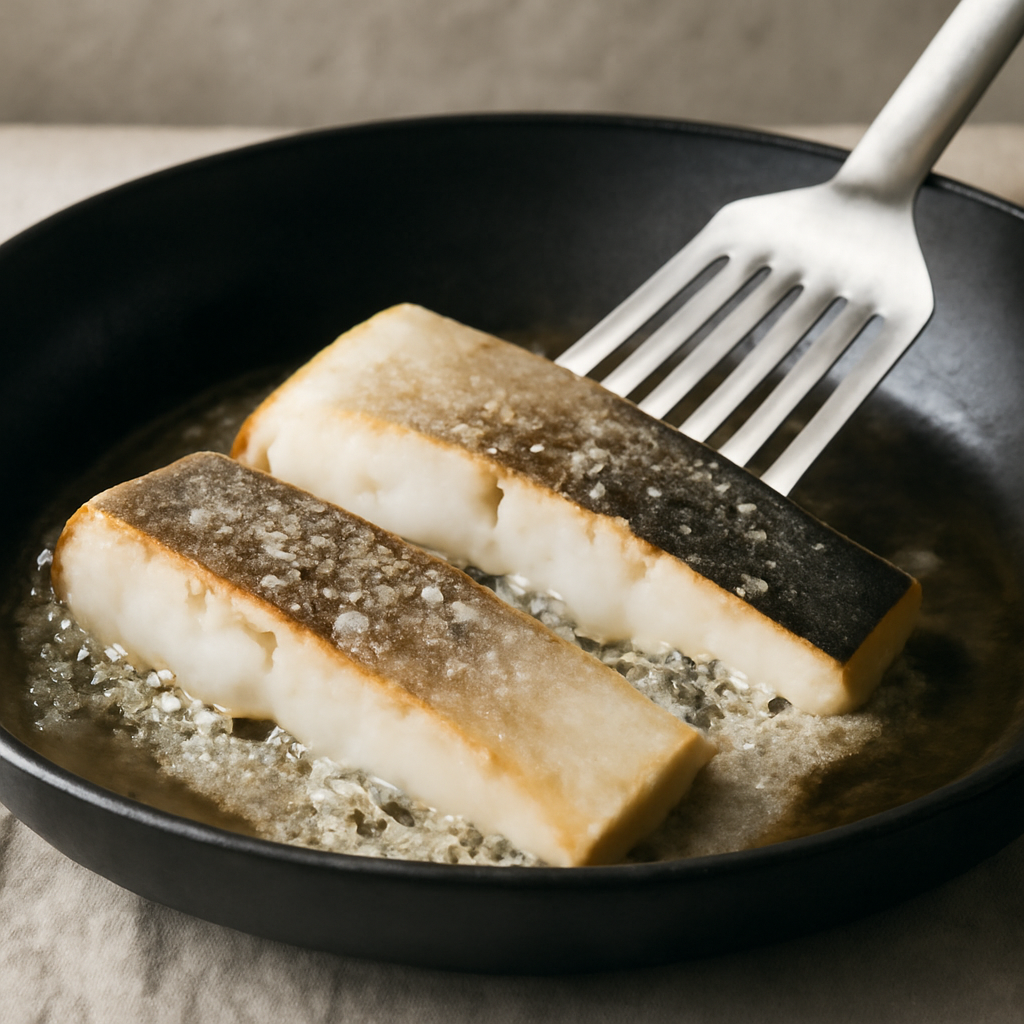
In a wide, shallow frying pan with a lid, heat the sunflower oil and 15g of the butter over a medium-high heat. When the butter stops foaming, lay the haddock fillets skin-side down. Press each fillet gently with a fish slice for the first 30 seconds to prevent the skin from curling. Cook for 3 minutes until the skin is golden and releases cleanly from the pan. Turn the fillets and cook for a further 60 seconds on the flesh side. Remove to a plate. The fish will not be cooked through at this stage.
-
Reduce the heat to medium-low. Add the remaining 15g of butter to the same pan. Add the sliced shallots and a pinch of salt. Cook, stirring occasionally, for 6 to 7 minutes until the shallots have softened and turned translucent with pale golden edges. Add the sliced garlic and cook for a further 90 seconds without letting it brown.
-
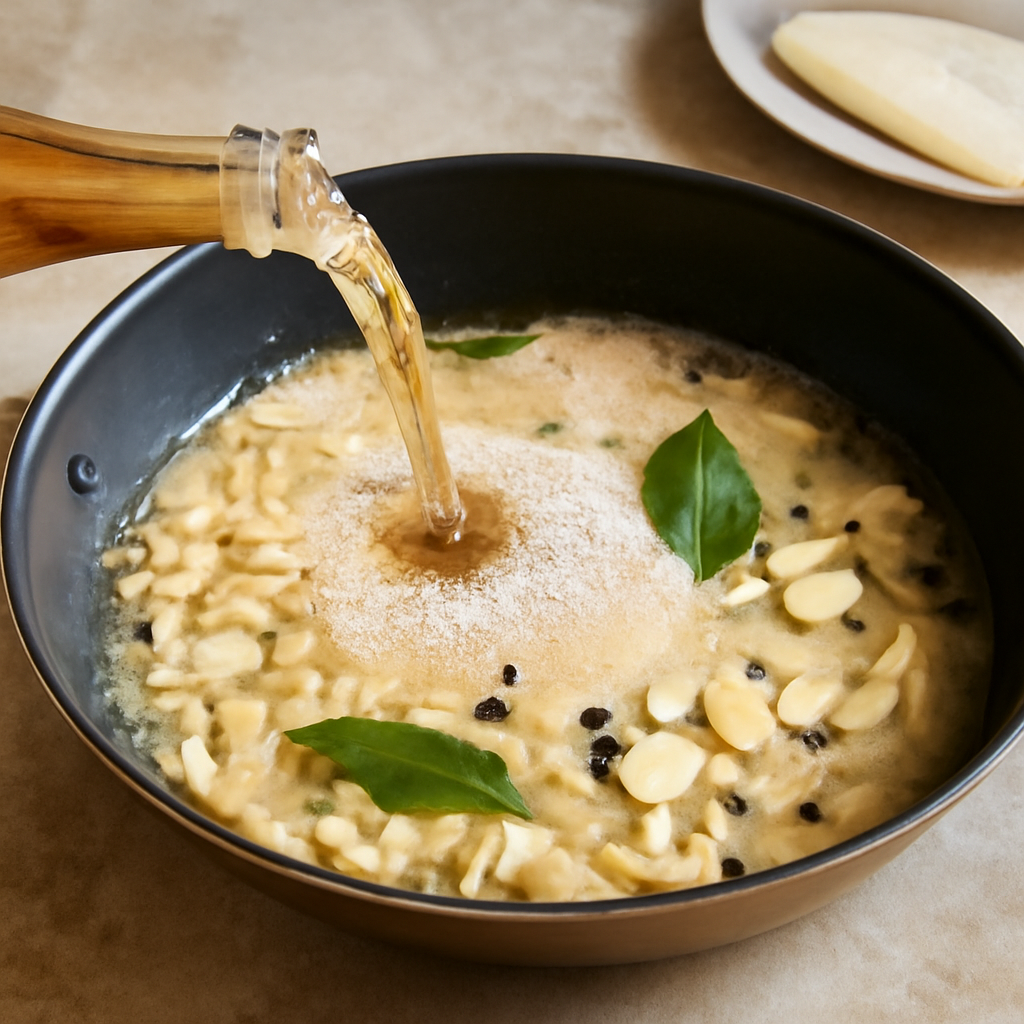
Pour in the cider. It will hiss and foam immediately. Add the bay leaves and peppercorns. Raise the heat to medium-high and let the cider reduce by roughly half, which takes approximately 8 to 10 minutes. The liquid should look slightly syrupy at the edges of the pan and the sharp alcohol smell will have mellowed to something rounder and faintly apple-sweet.
-
Reduce the heat to low. Stir the Dijon mustard into the double cream in a small bowl until combined, then pour this into the reduced cider. Stir gently and let the sauce simmer for 2 minutes. Taste it. It should be tangy, faintly sweet and slightly bitter from the cider skin; season with salt if needed.
-
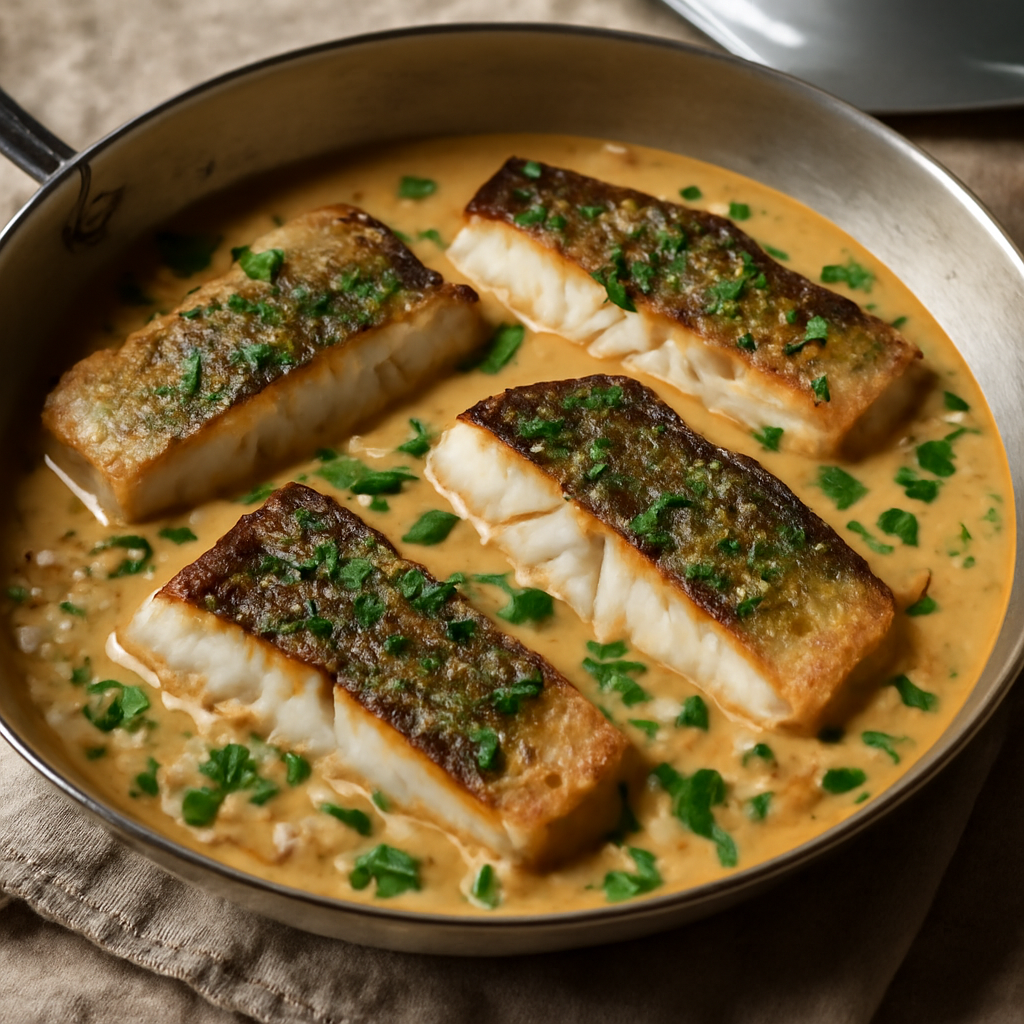
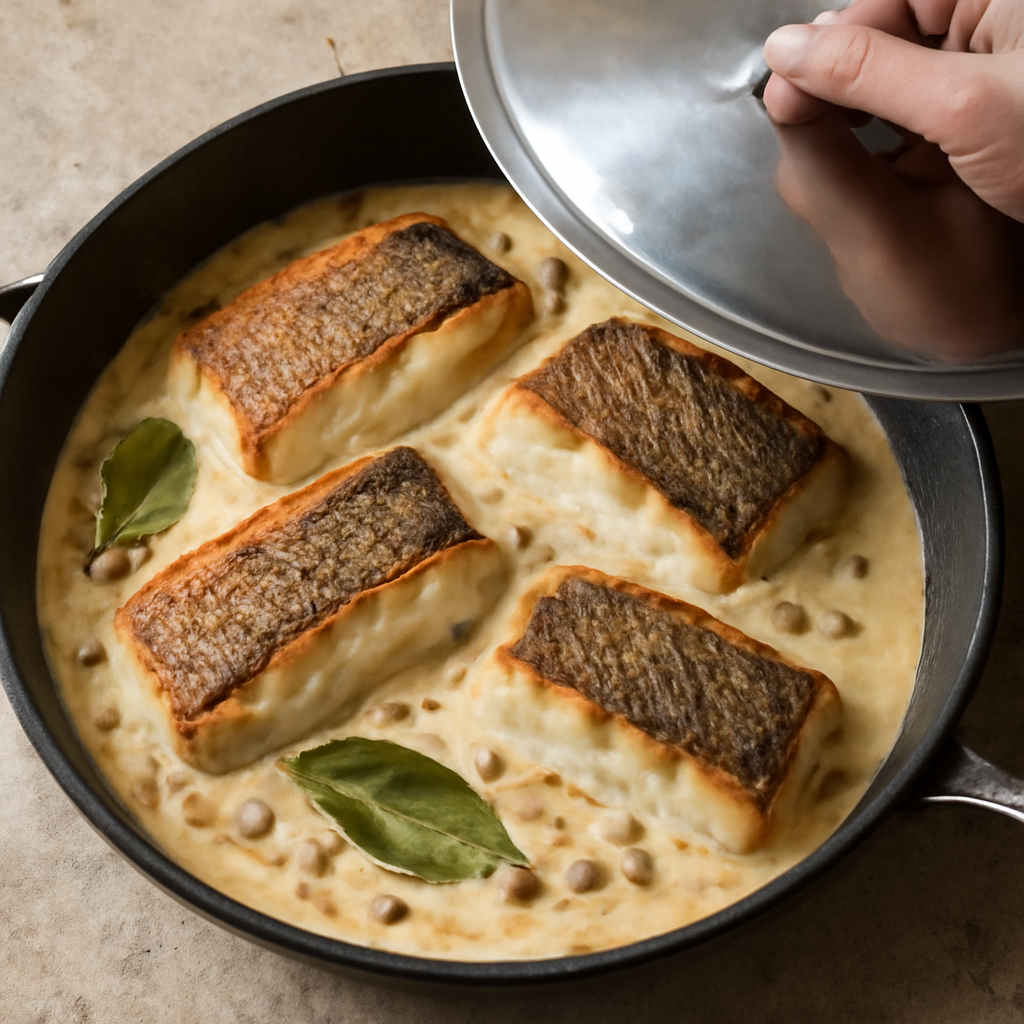
Nestle the seared haddock fillets back into the pan, skin-side up, spooning some sauce over each one. Cover the pan with the lid and cook on the lowest heat for 4 to 5 minutes. The fish is ready when the flesh at the thickest point has turned from translucent to opaque and flakes cleanly when pressed with a finger. A 180g fillet at 4 minutes will still have a very slight give at the centre, which is what you want.
-
Remove the bay leaves and peppercorns. Squeeze a small amount of lemon juice directly into the sauce and stir. Scatter the chopped parsley over the fillets just before serving.
Irish Context
Haddock is landed regularly at Irish ports, particularly along the west and north coasts, and is one of the more affordable white fish in Irish fishmongers and supermarket counters. Dry cider has been produced in Ireland for decades, and the combination of apple-based acidity with white fish is a natural one given that both are produced here in reasonable quantity.
This is not a dressed-up dish; it is the kind of thing you make on a Tuesday when the fish counter had good haddock and there is a bottle of cider in the fridge that did not get finished.
Tips
Use a dry cider rather than a medium or sweet one. A medium cider will make the sauce cloying once it reduces.
Several Irish producers make a bone-dry cider that works particularly well here. If the haddock fillets are very thick, over 3cm at the thickest point, add an extra minute under the lid.
If they are thin tail-end pieces, check them at 3 minutes. The sauce can split if the heat is too high when you add the cream.
Keep it at a bare simmer from that point on. Smoked haddock can replace the fresh in this dish.
If using smoked fillets, omit the added salt entirely until you have tasted the finished sauce, as the fish will season the liquid as it cooks. Serve with mashed potato, which absorbs the sauce well, or with good bread to do the same job.

Author Commentary