
 AI
AI
 AI
AI
 AI
AI
Ingredients
Method
-
Preheat your oven to 200 Celsius, fan 180 Celsius. Line a baking tray with baking parchment or lightly flour it.
-
Sift the flour, bicarbonate of soda and salt together into a large wide bowl. Add the caster sugar and stir to combine. The bicarbonate must be evenly distributed or you will get green spots in the finished loaf.
-
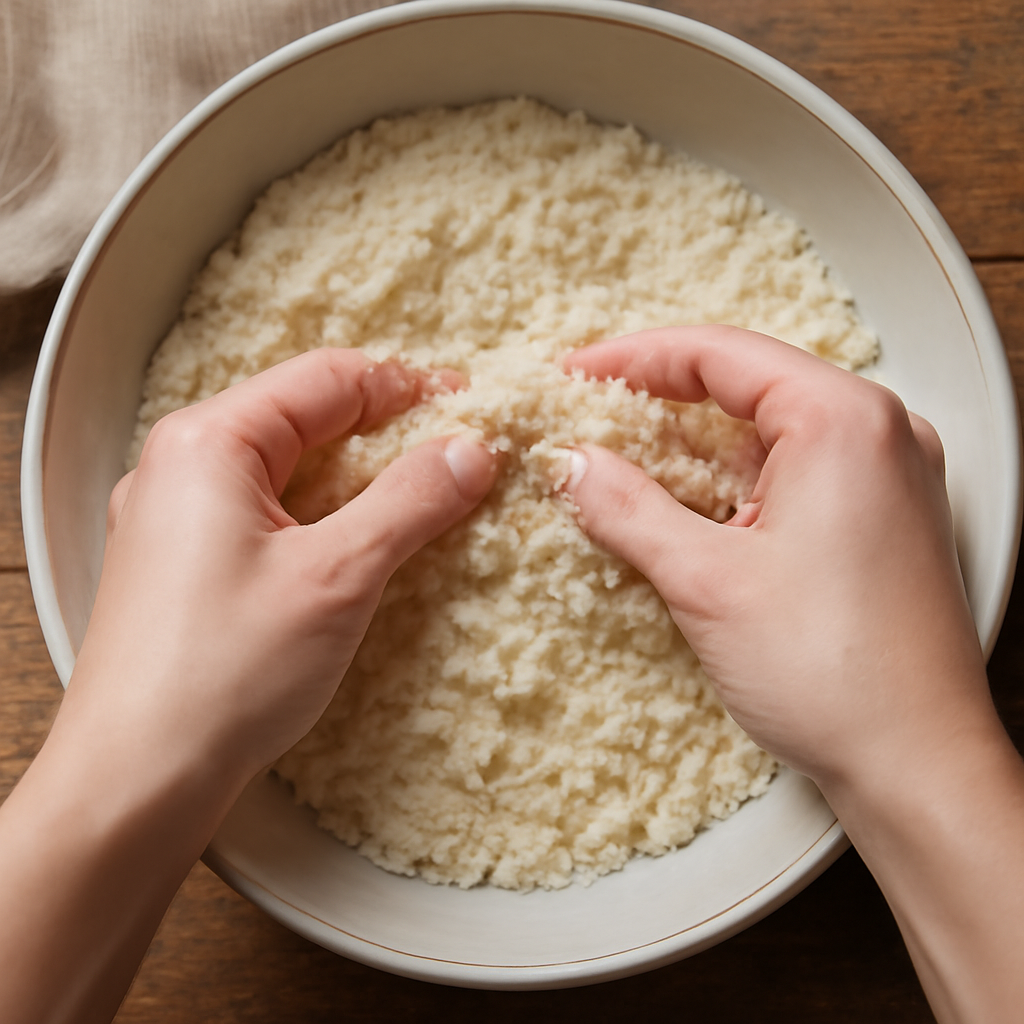
Add the cold butter cubes to the flour mixture. Rub the butter in with your fingertips until the mixture resembles coarse breadcrumbs. Work quickly here; warm hands melt butter and tighten the crumb.
-
Stir in the sultanas and caraway seeds if using. Make a well in the centre.
-
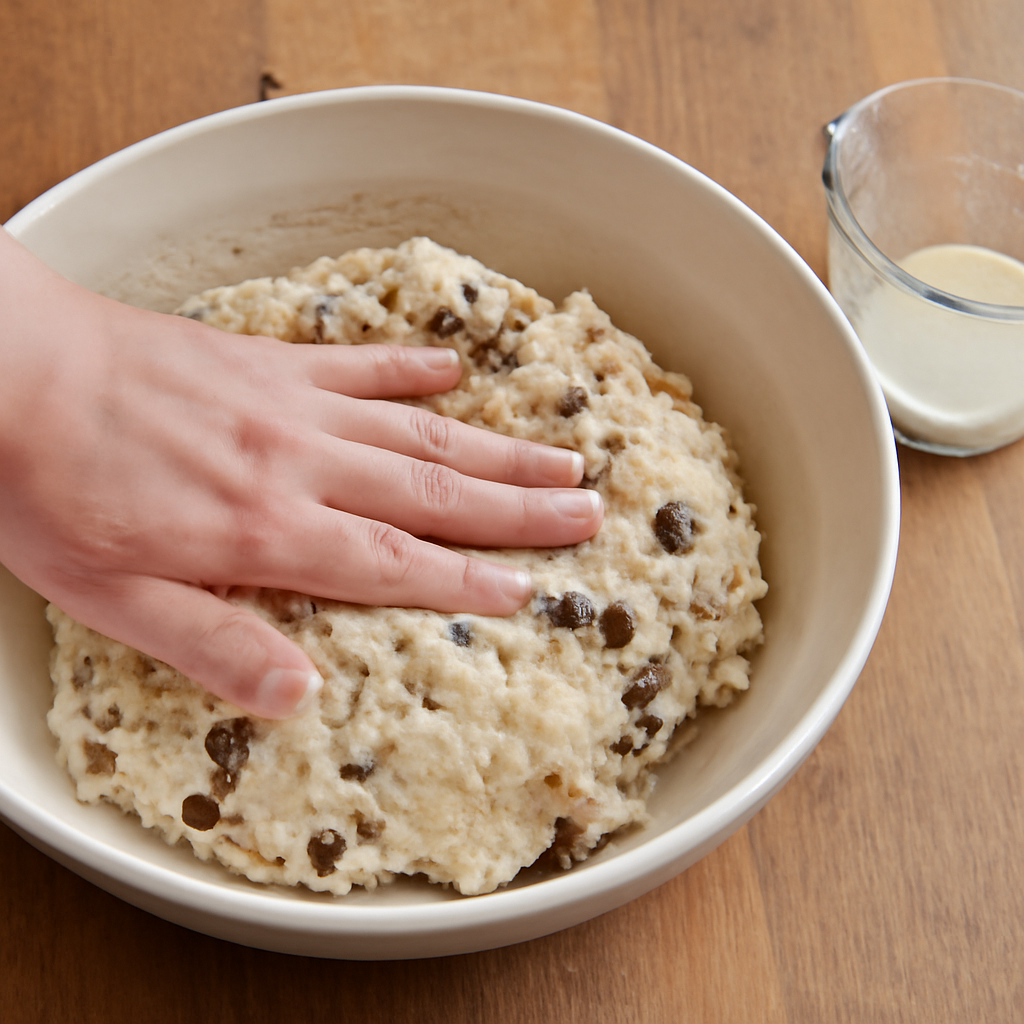
Whisk the egg into the buttermilk. Pour three-quarters of the buttermilk mixture into the well. Using one hand held flat like a paddle, bring the dough together with broad circular strokes, drawing in flour from the sides. Add the remaining buttermilk gradually until you have a soft, slightly sticky dough. Do not add it all at once; buttermilk varies in thickness and you may not need every drop.
-
Turn the dough out onto a lightly floured surface. Pat and fold it gently two or three times until it just holds together. Do not knead. Overworking activates gluten and produces a tough, rubbery loaf rather than the open, cakey texture you are after.
-
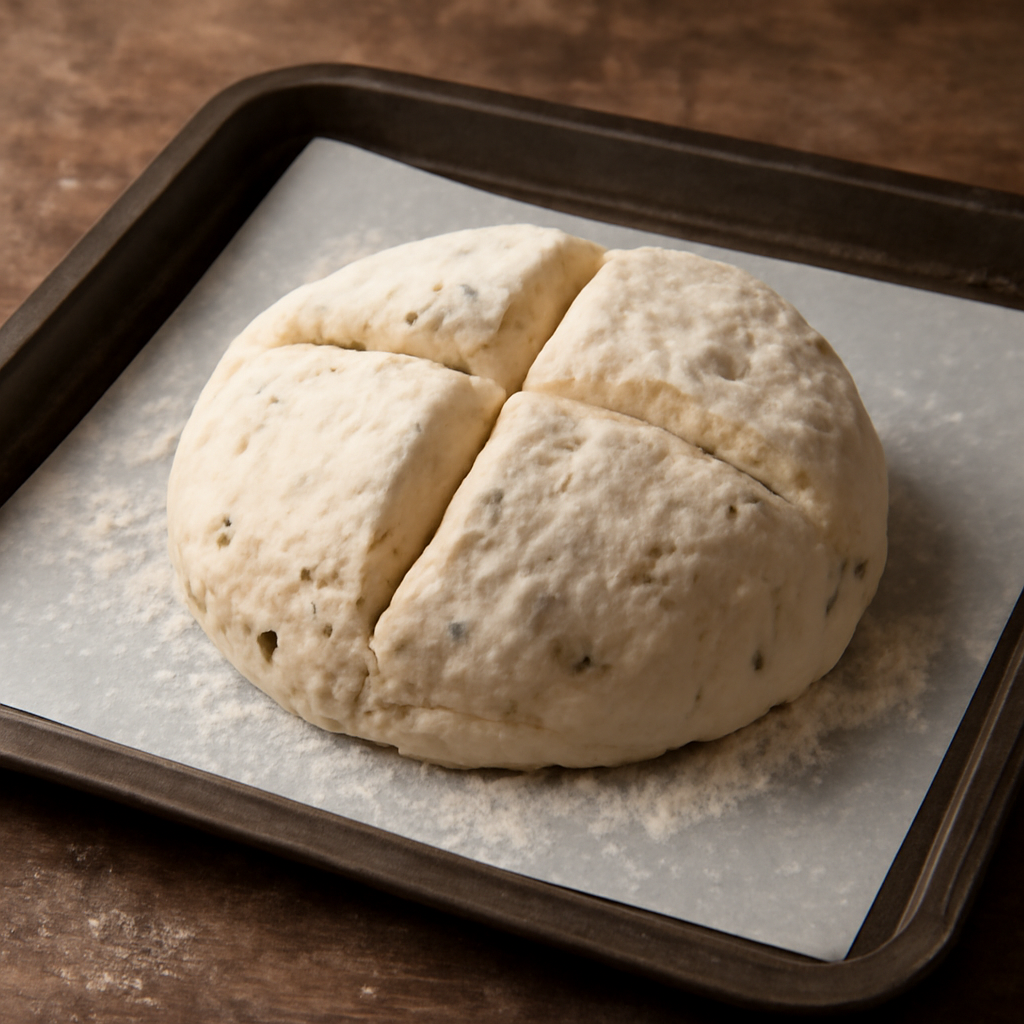
Shape the dough into a round about 5cm high. Place on the prepared baking tray. Using a sharp knife dipped in flour, cut a deep cross through the top, going almost to the base. This lets heat into the centre and is not decorative; without it the inside will be underbaked while the outside colours.
-
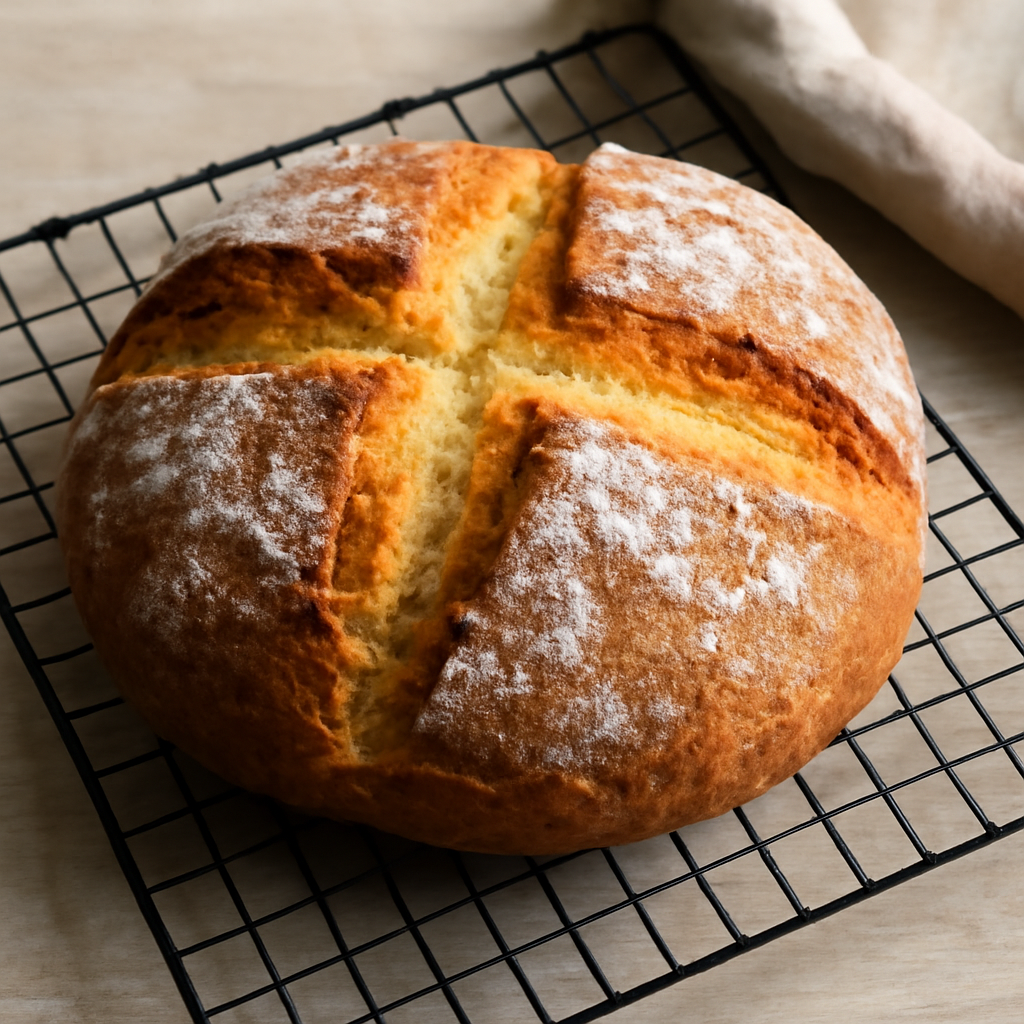
Bake for 40 to 45 minutes. The loaf should be a deep golden brown all over, including along the base. Tap the bottom with your knuckle; it should sound hollow. If it sounds solid or dull, return it to the oven for a further five minutes.
-
Transfer to a wire rack. Leave to cool for at least 20 minutes before cutting. Cutting too early releases steam and compresses the crumb.
Irish Context
Soda bread became common in Irish households in the mid-nineteenth century once bicarbonate of soda became available and affordable. Soft Irish wheat, which had a low gluten content, was poorly suited to yeasted breads but worked well with chemical leavening, producing a bread that came together without kneading or proofing time.
The sweet version, sometimes called cake bread or tea bread, used whatever dried fruit was in the house and was baked for weekend breakfasts or to accompany a pot of tea. It is still made this way in many kitchens, in cast iron pots or on baking trays, and the method has changed very little because there is no real reason to change it.
Tips
Buttermilk is doing two things here: providing moisture and reacting with the bicarbonate of soda to give the lift. If your buttermilk has separated in the carton, shake it well before measuring.
If you do not have buttermilk, stir 1 tablespoon of lemon juice or white wine vinegar into 350ml whole milk, leave it for five minutes, then use it straight away. The acidity is what matters.
Day-old soda bread toasts well and takes butter evenly across the surface. Fresh soda bread tears rather than slices cleanly, so a serrated knife is worth reaching for.
For a slightly darker, more caramelised crust, brush the top lightly with beaten egg before baking. This also gives the finished loaf a shine.
The caraway seeds add a gentle anise note that works well against the sweetness of the sultanas, but they are not to everyone's taste. Leave them out without adjusting anything else.
Soda bread does not keep as long as yeasted bread. It is best eaten within two days, or freeze it in slices on the day it is made.

Author Commentary